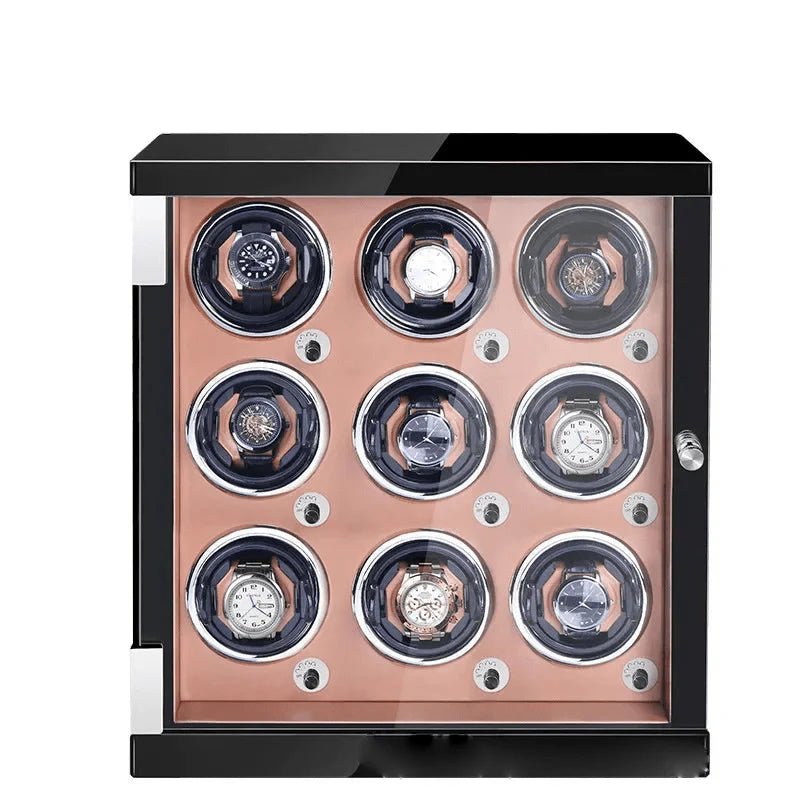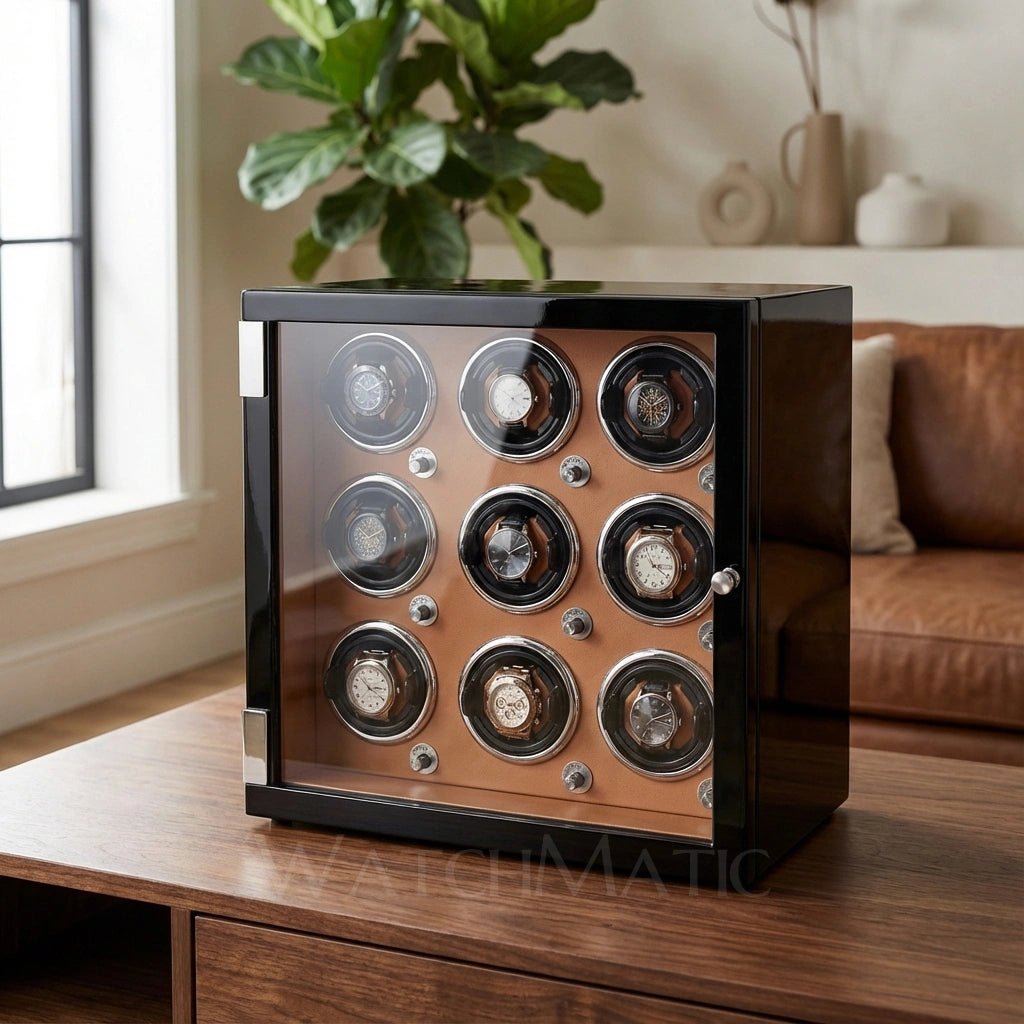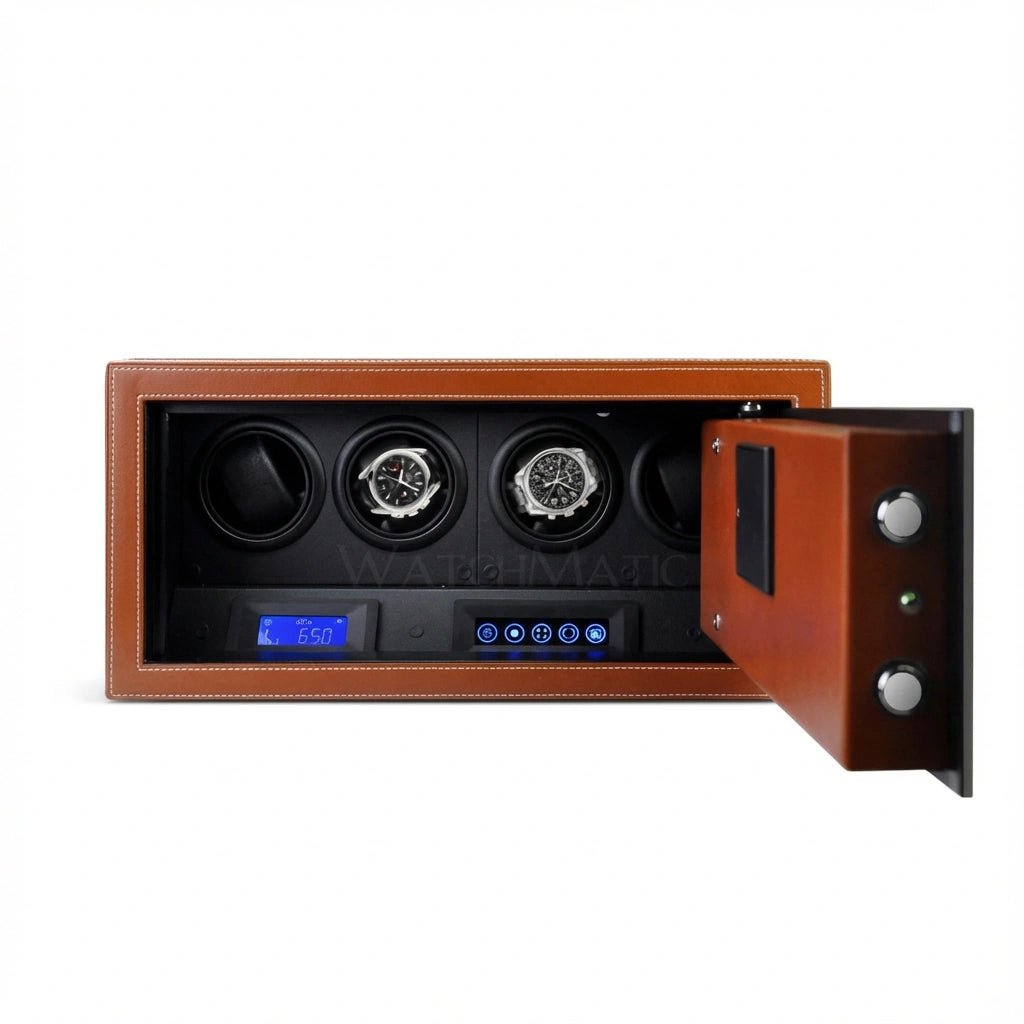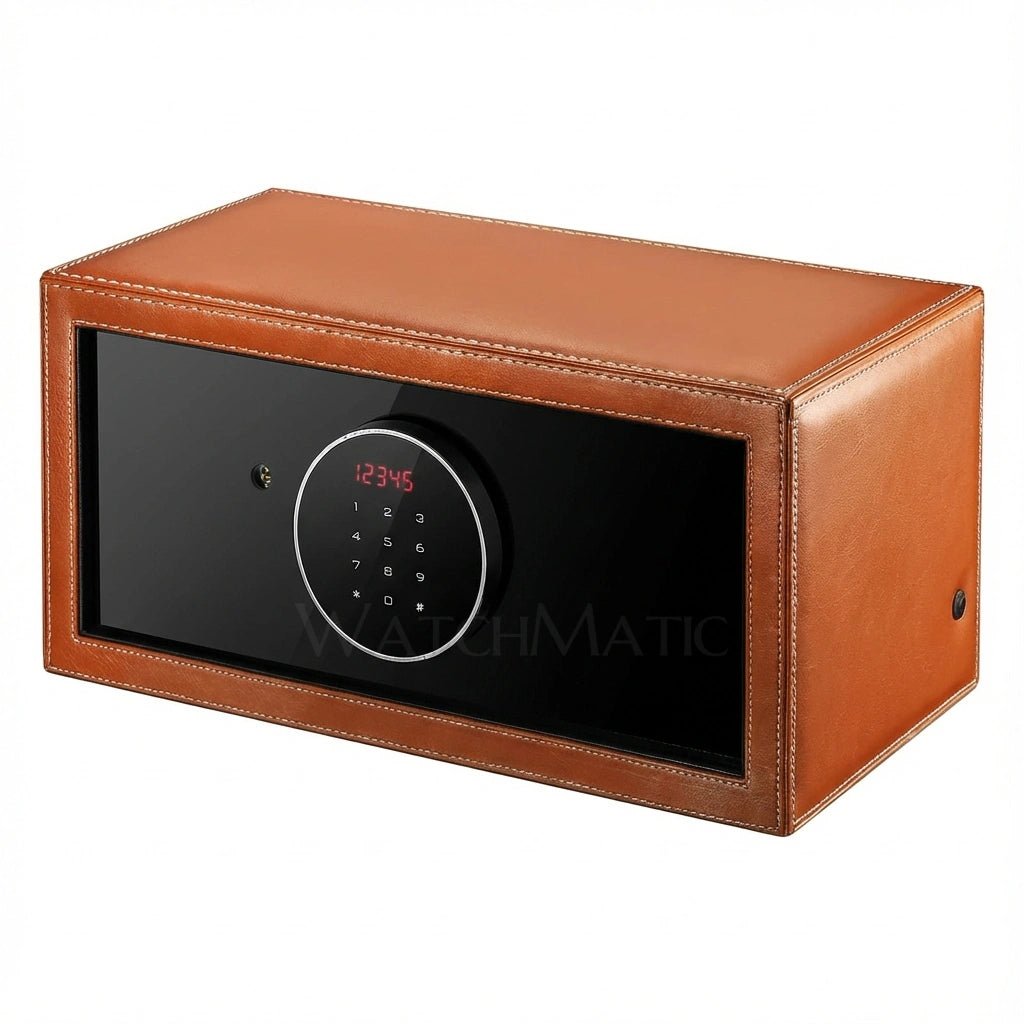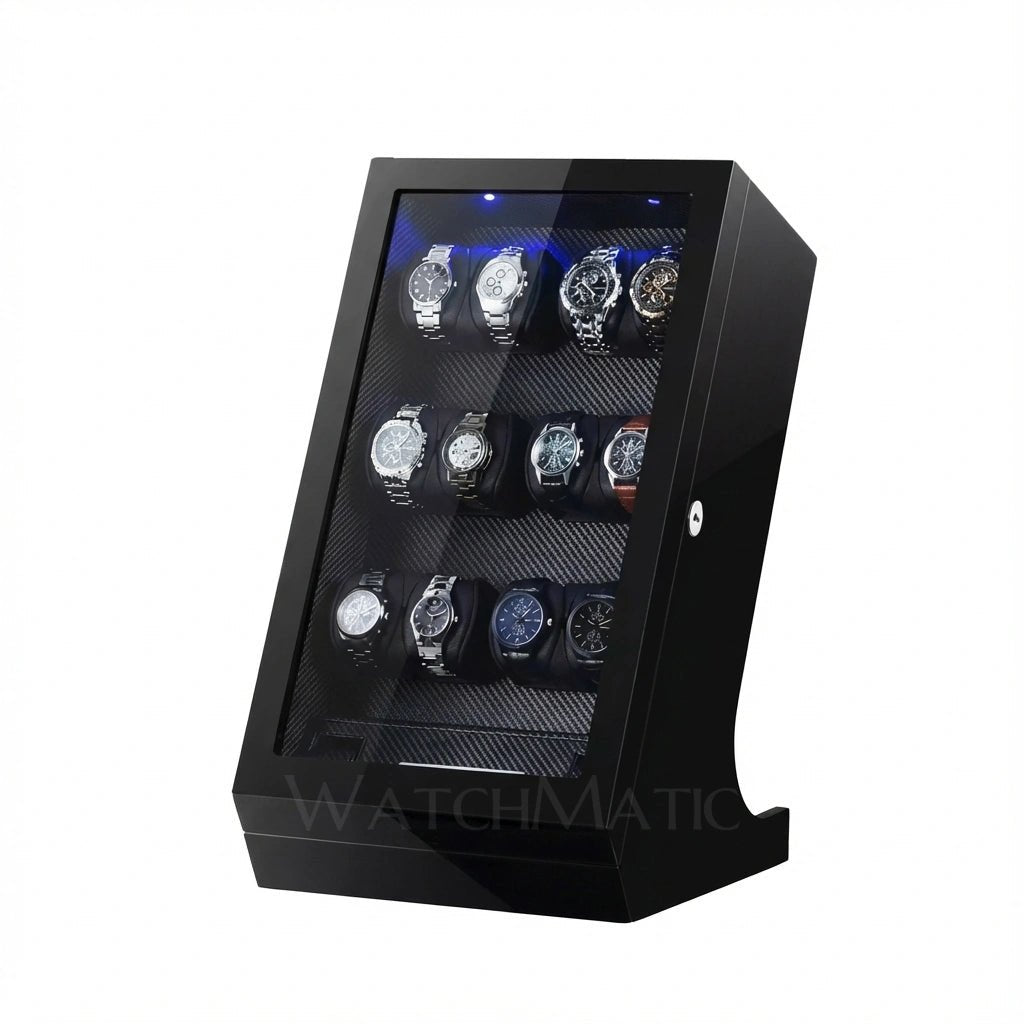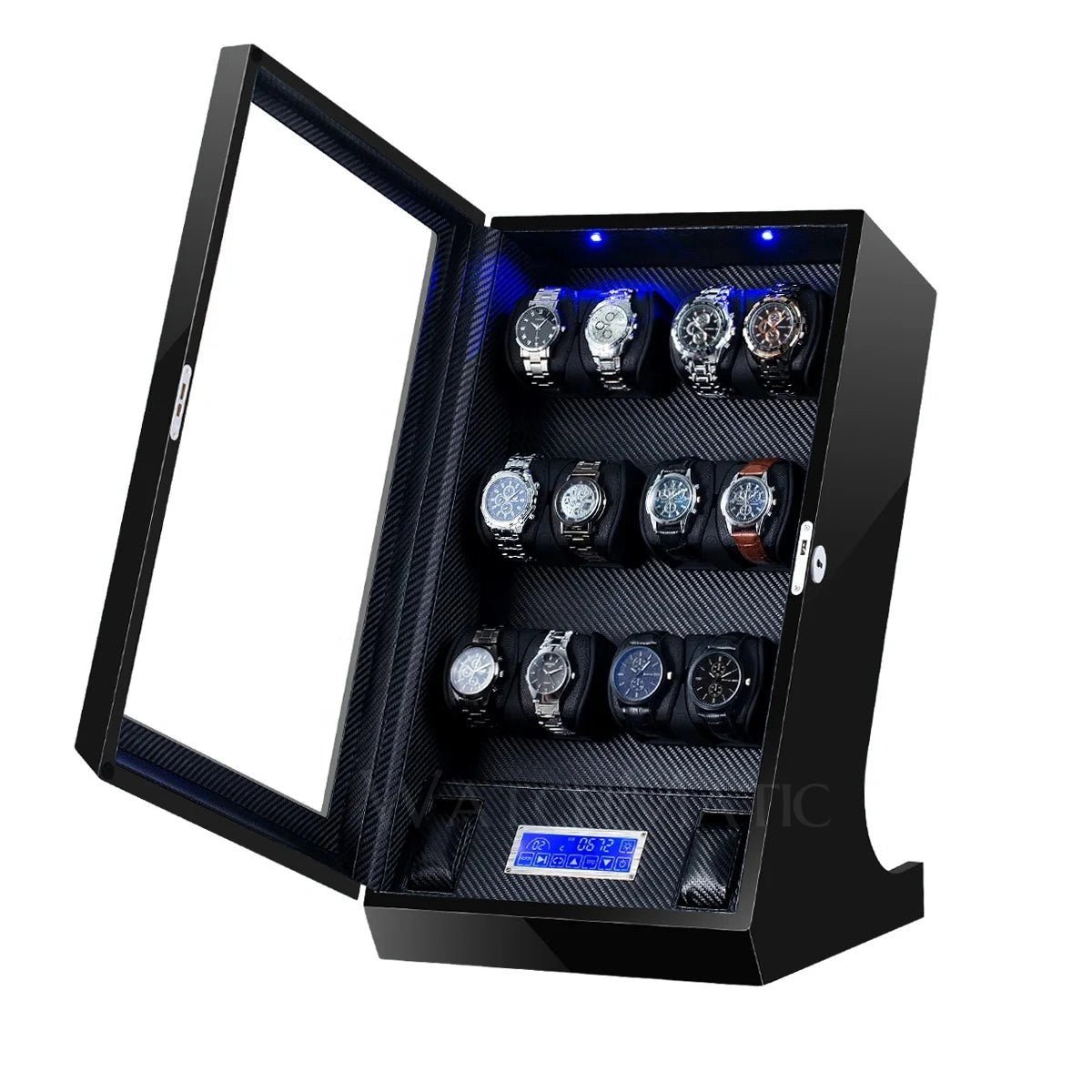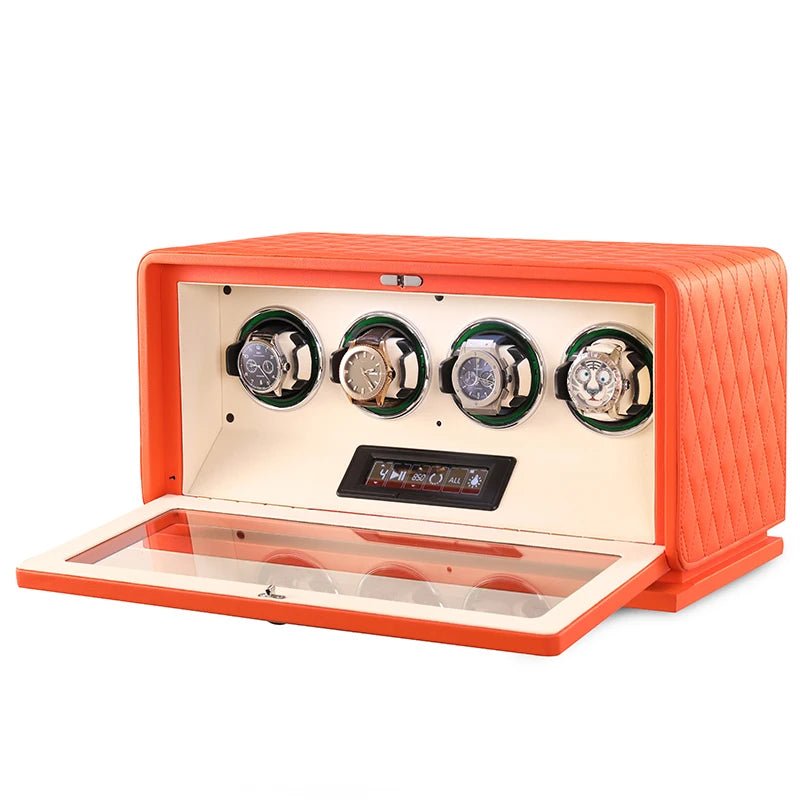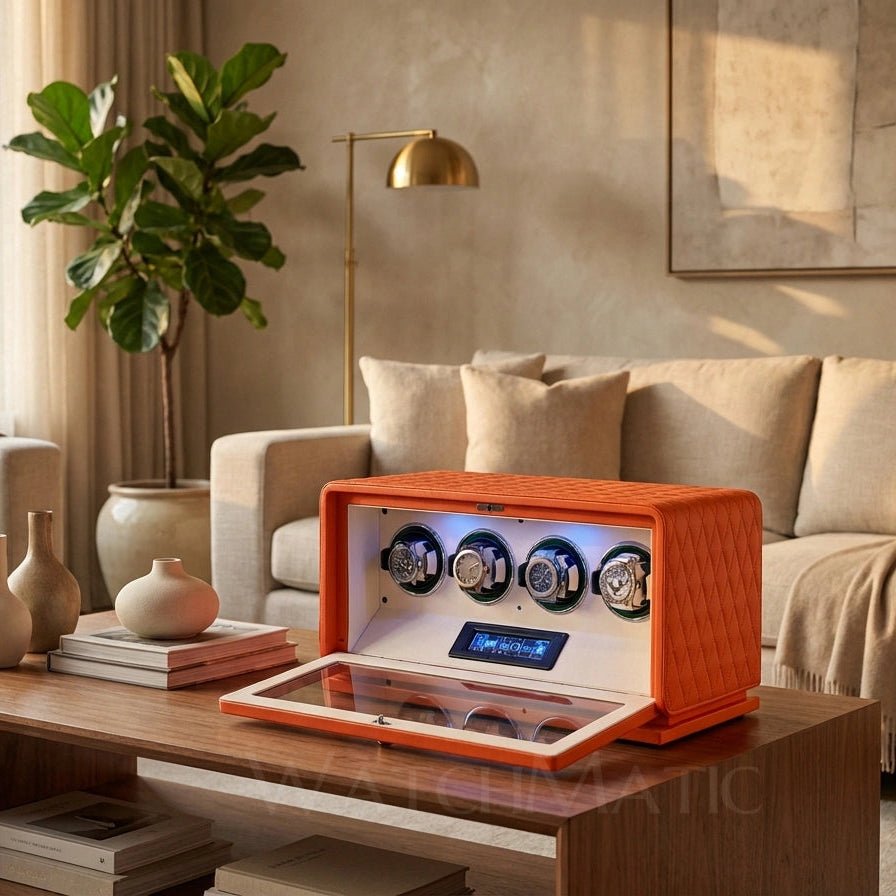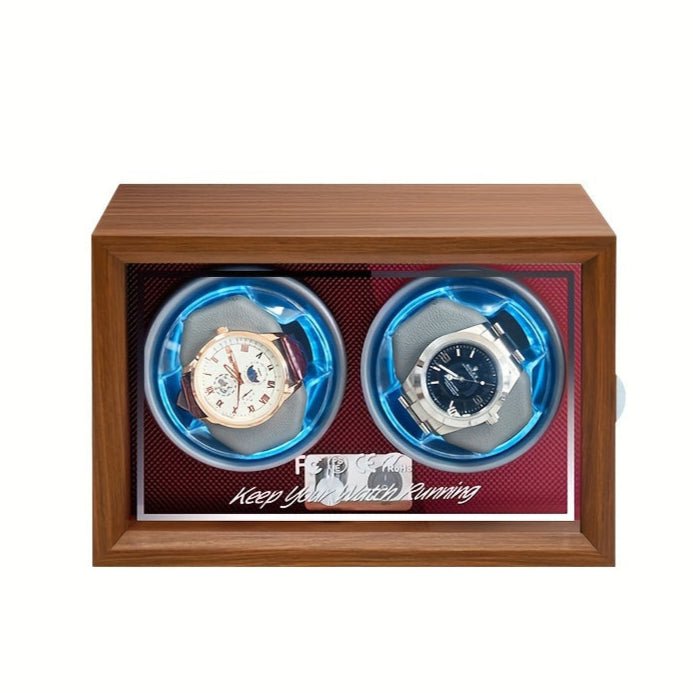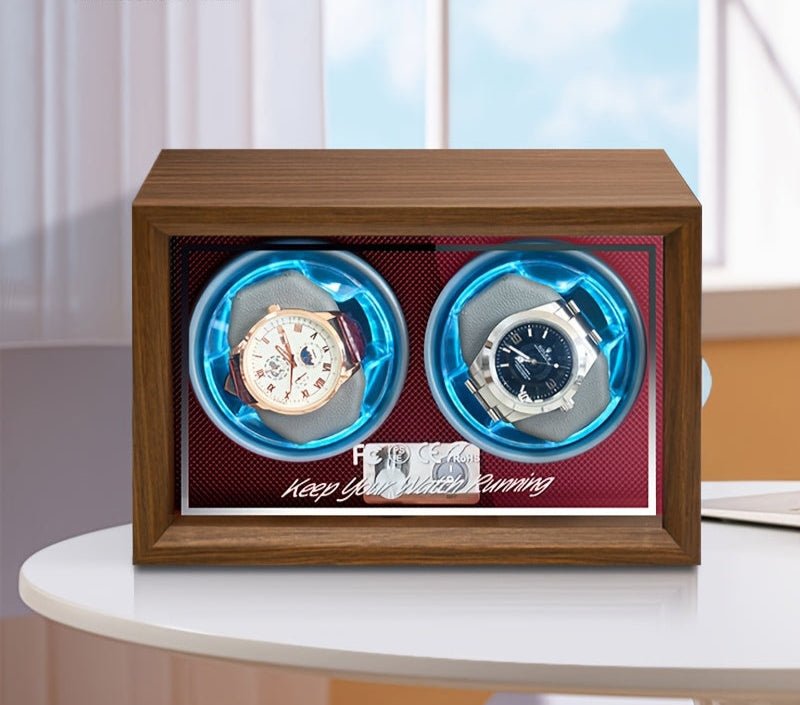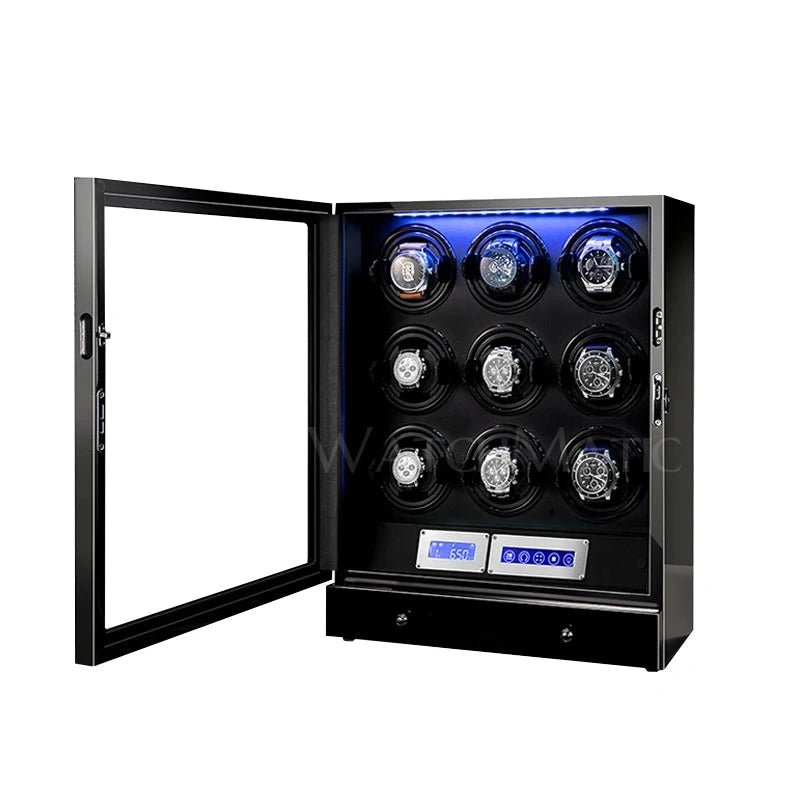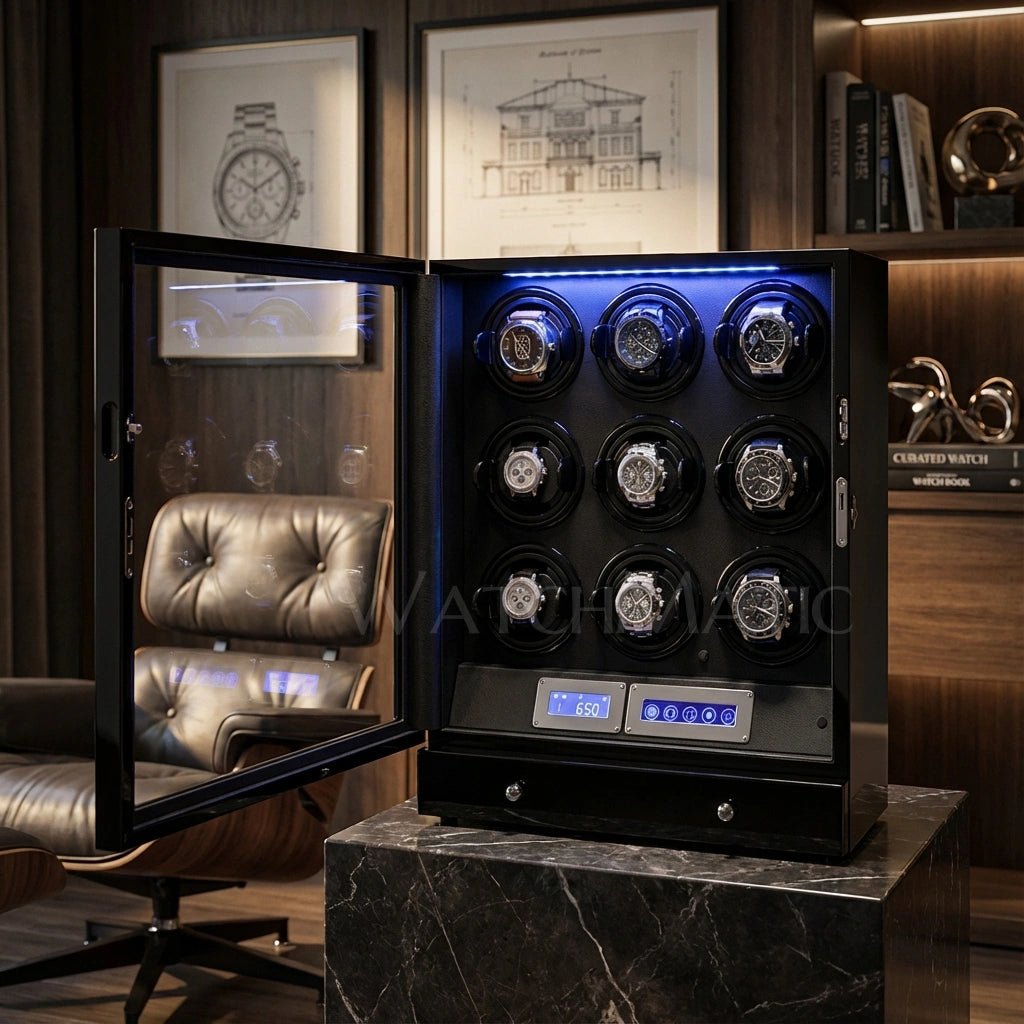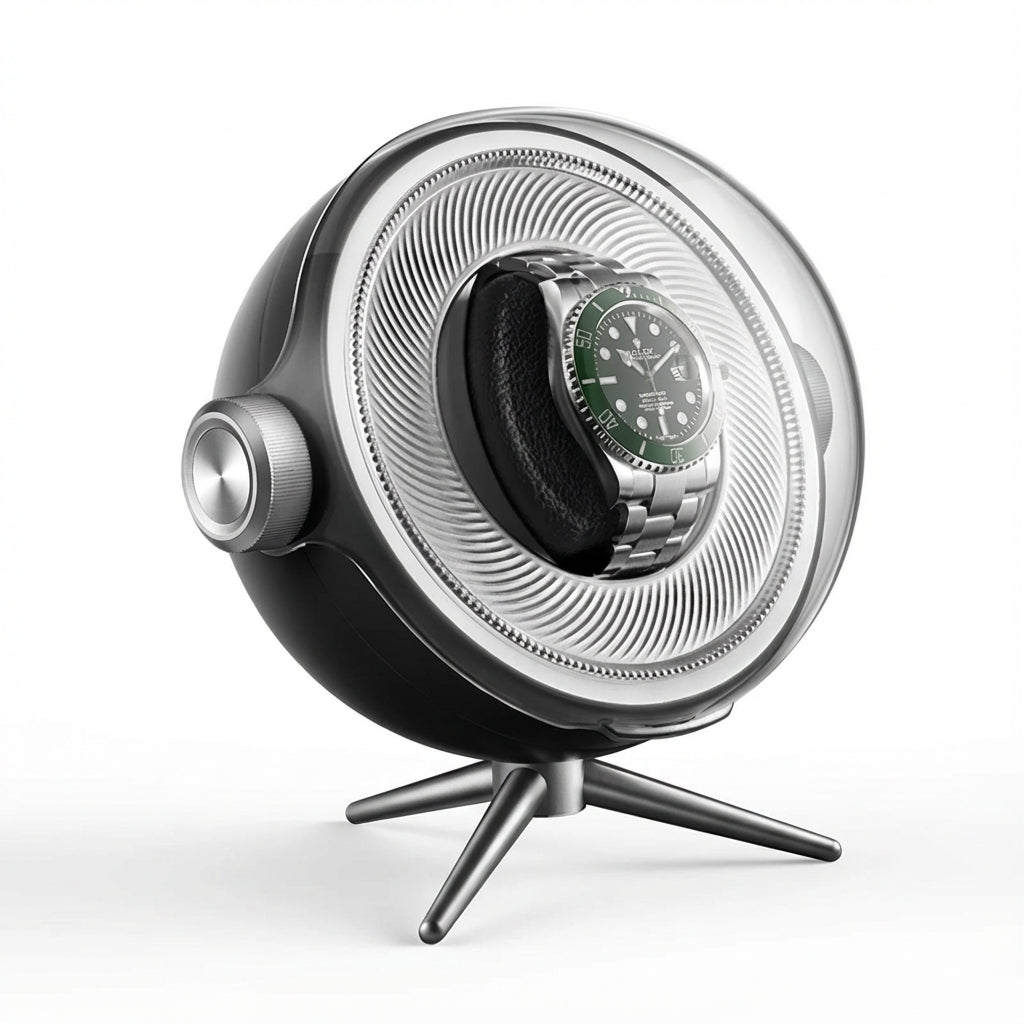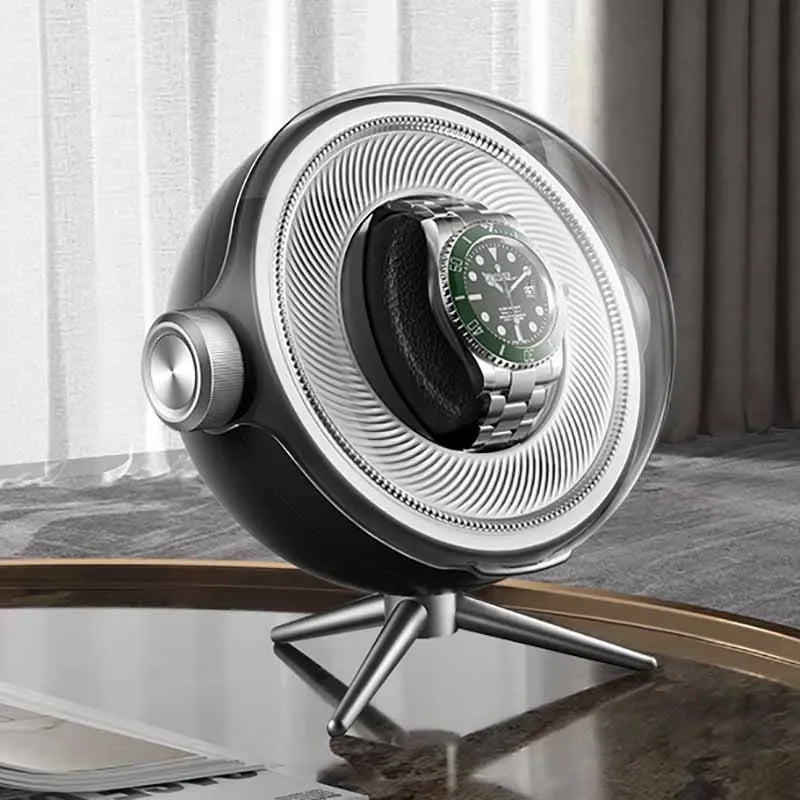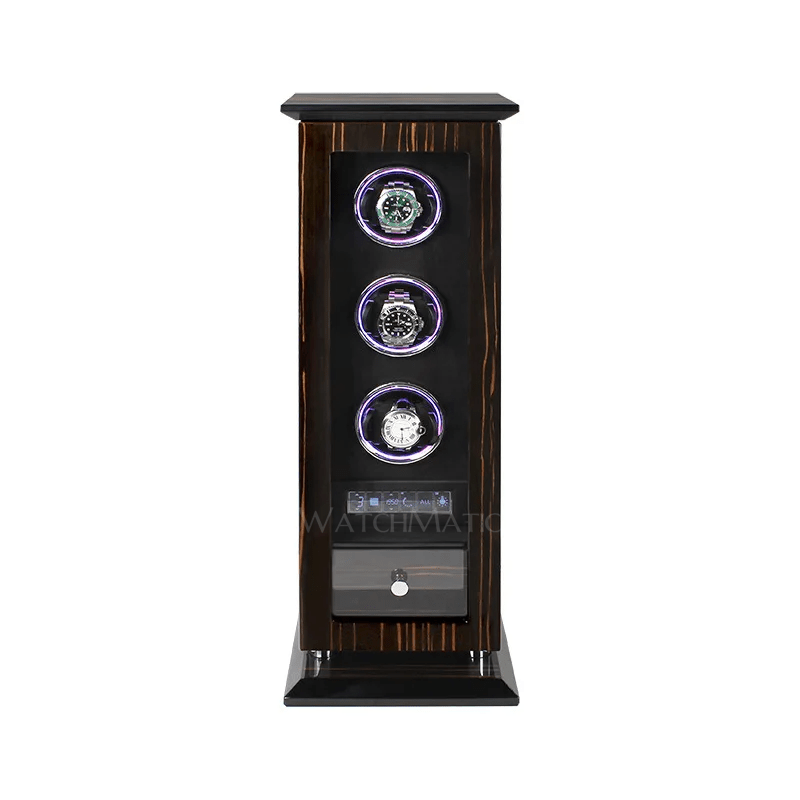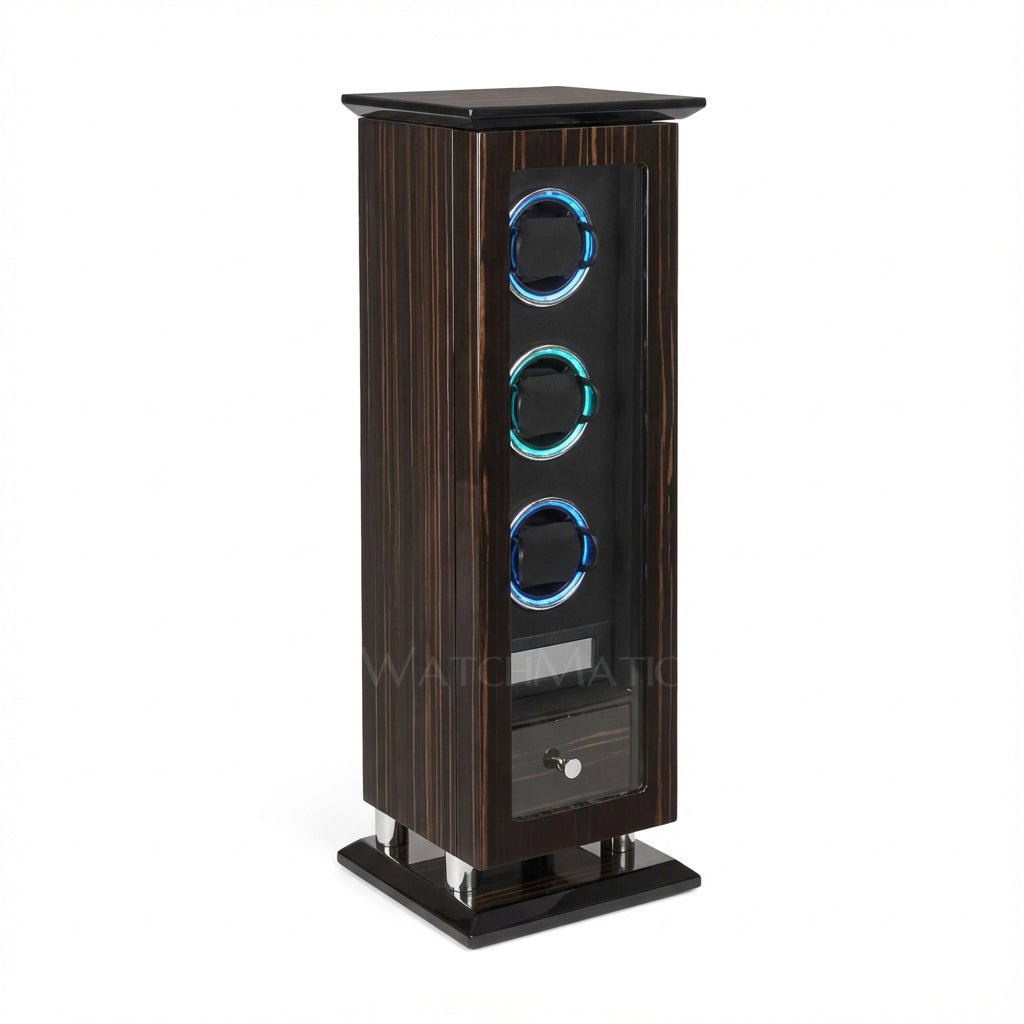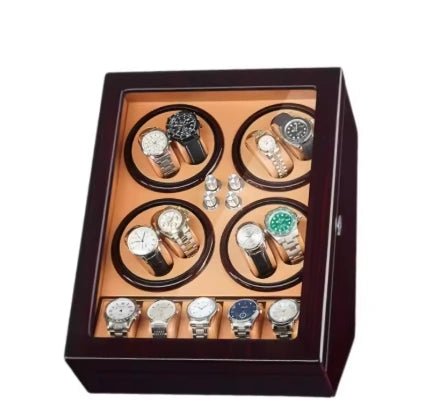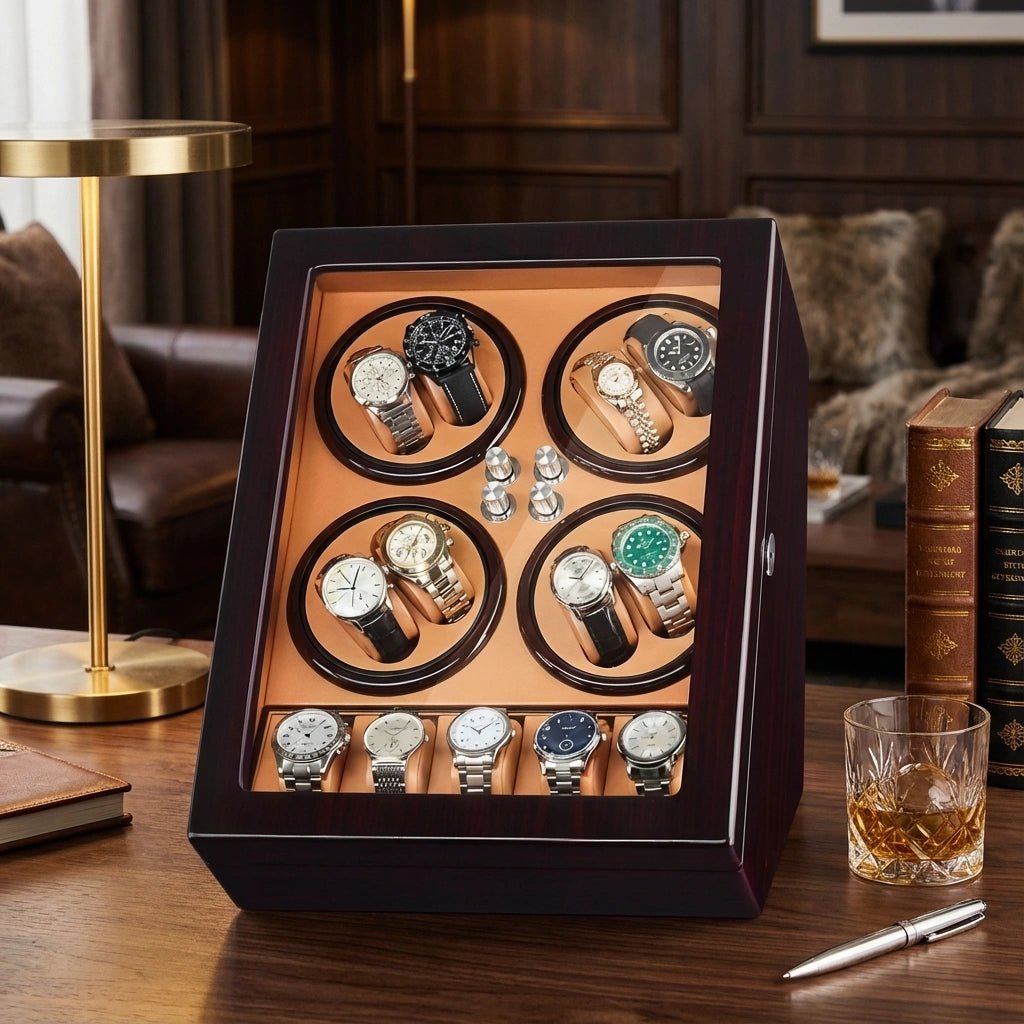
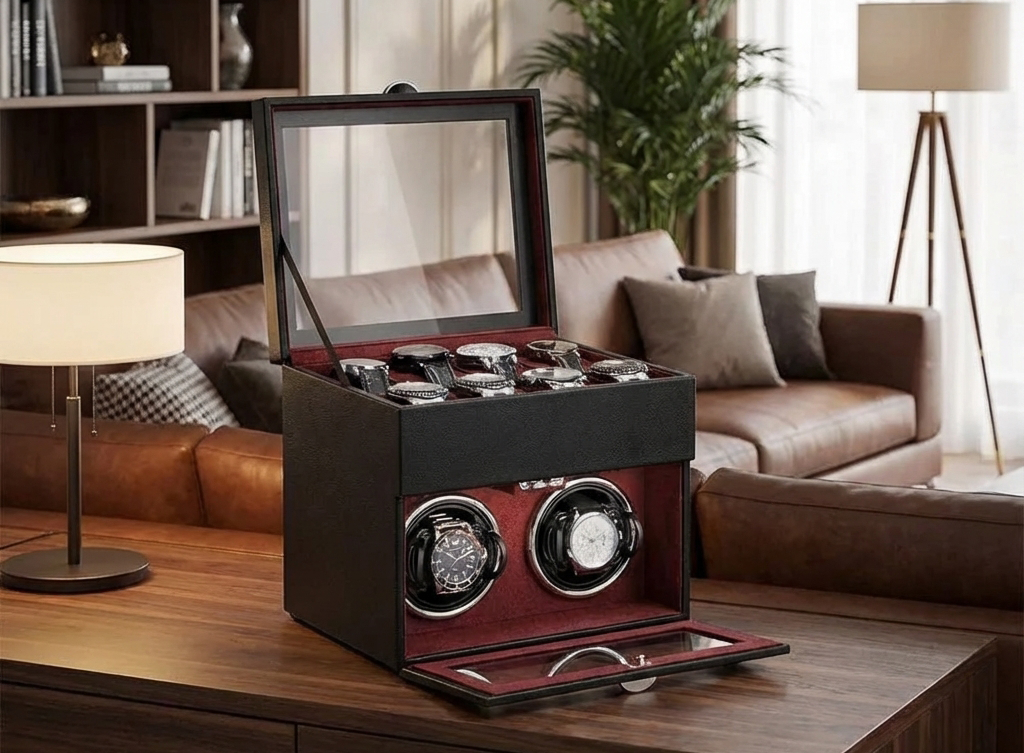
Investing in your first watch winder is about more than just finding a display box; it is about choosing a tool that supports the longevity of your timepiece. As highlighted by the experts at WatchMatic, selecting the wrong device can lead to inadequate winding or even magnetic interference. Recently featured on Binghamton Herald, our guide outlines the essential technical factors every new collector should evaluate before making a purchase
1. Motor Quality and Noise Levels
The heart of any winder is its motor. Many entry-level options use low-quality motors that become noisy over time or emit magnetic fields that can jeopardize your watch’s accuracy. At WatchMatic, we prioritize high-quality, shielded Japanese motors. These are not only virtually silent—making them ideal for bedside use—but also ensure that no magnetic flux reaches your delicate hairspring.
2. Programmable TPD (Turns Per Day)
Not every watch winds the same way. A vintage piece might require 600 TPD, while a modern sports watch like a Rolex typically thrives at 650 TPD. Before buying, ensure the winder offers programmable settings. A "one-size-fits-all" rotation cycle is rarely effective for a serious collection and can lead to either an unwound watch or unnecessary mechanical tension.
3. Rotation Direction: Clockwise vs. Counter-Clockwise
Some movements only wind in one direction (unidirectional), while others wind in both (bi-directional). A professional-grade watch winder must offer the ability to switch between clockwise, counter-clockwise, and bi-directional modes. Using the wrong direction won't break your watch, but it will fail to keep it running, defeating the purpose of the device.
4. Security and Storage Expansion
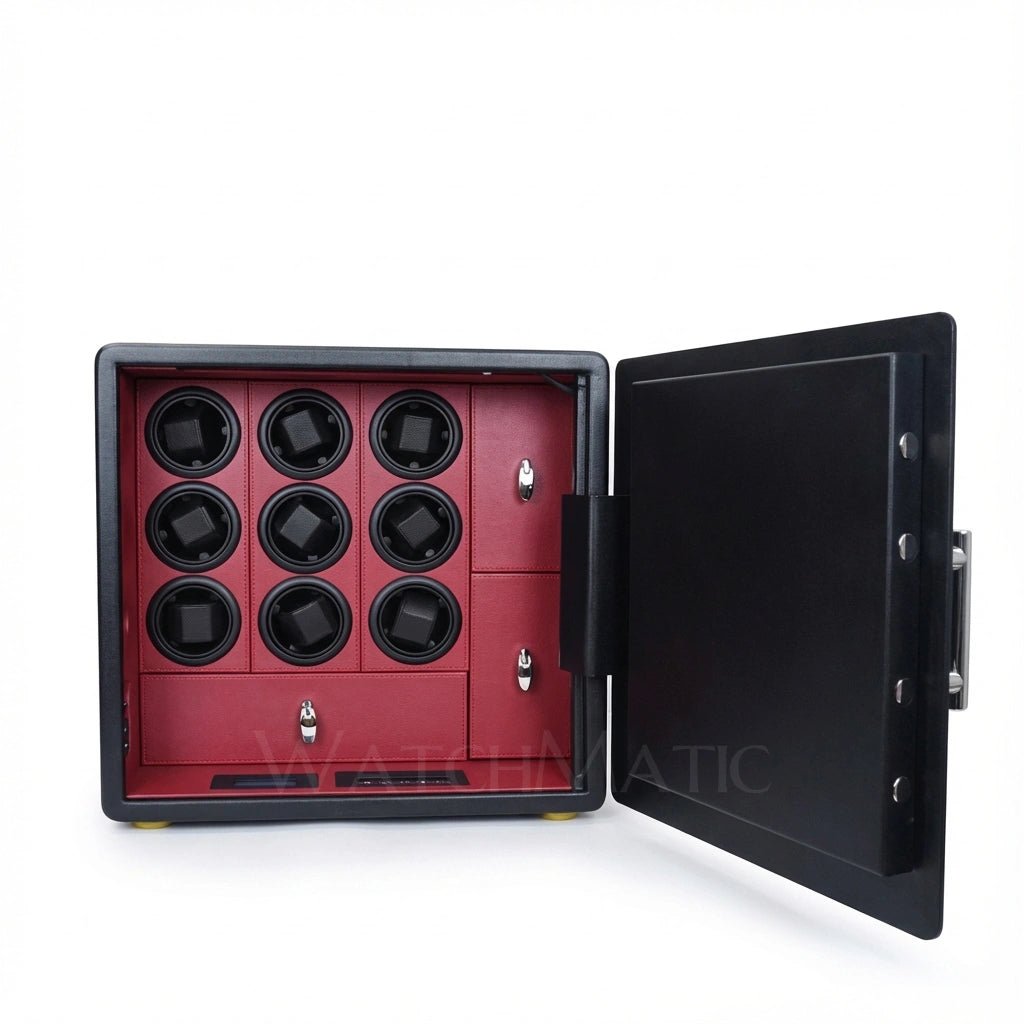
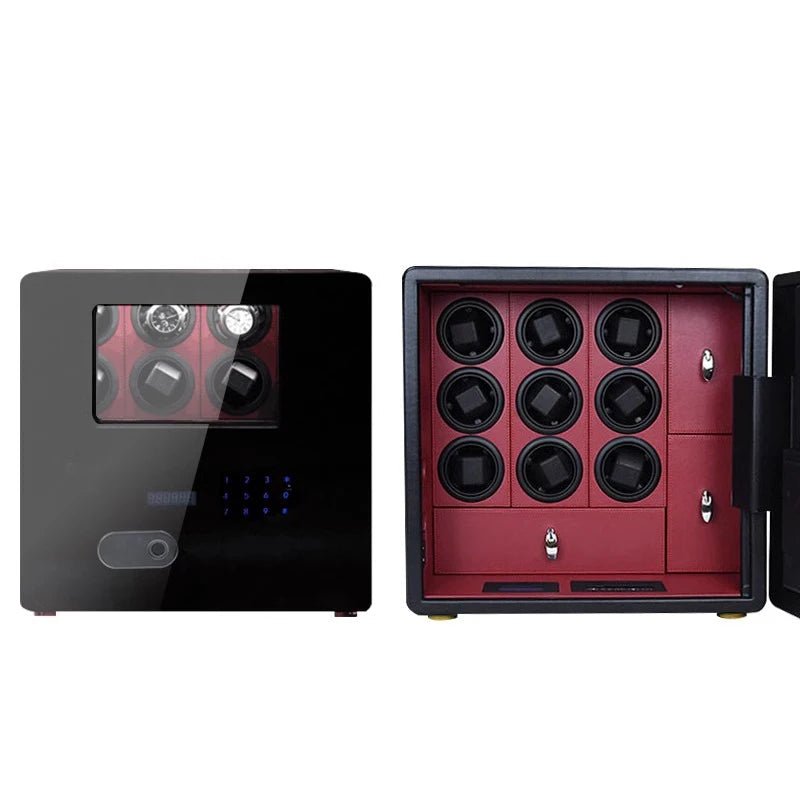
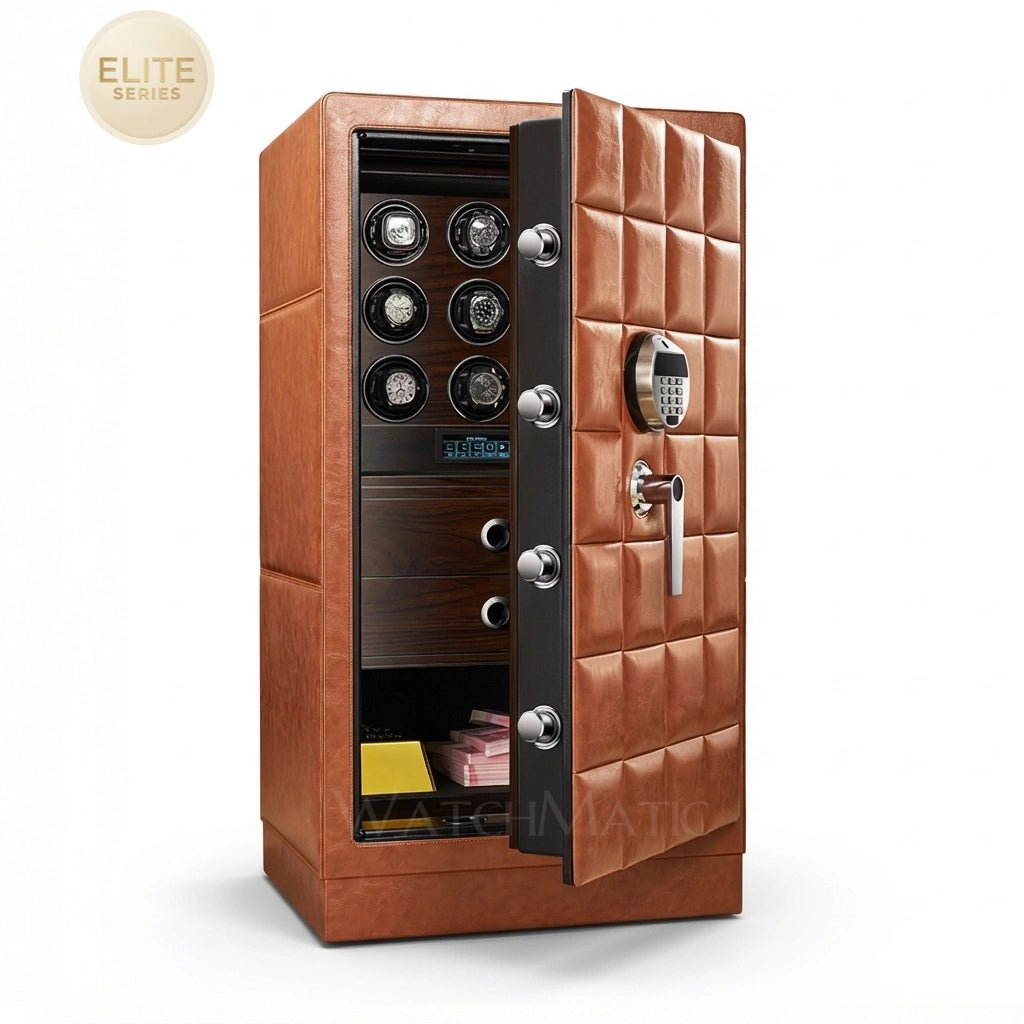
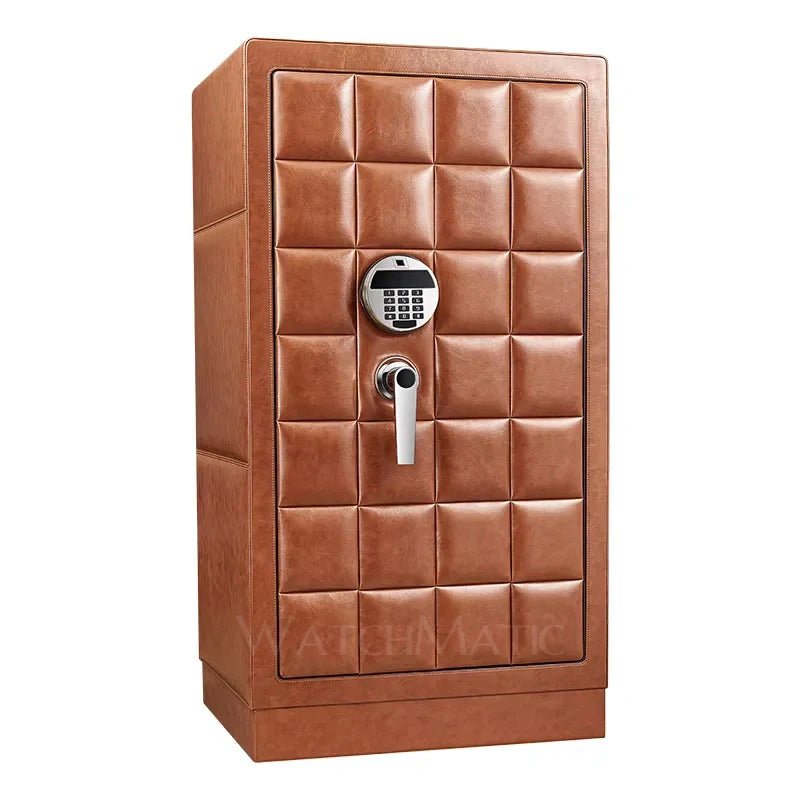
If you are buying your first winder, consider your future collection. While a single-watch unit is elegant, many collectors quickly find themselves needing more space. For those with high-value assets, it may even be worth considering a watch winder safe box from the start. This provides a centralized hub that offers both mechanical maintenance and protection against theft or fire.
Final Thoughts
Your first winder should be a partner to your watch. By focusing on motor shielding, TPD adjustability, and build quality, you ensure that your investment protects your horological legacy.